

Most fleece in your closet dies in the dryer before it ever hits its prime. You know the frustration. You pick up a fresh layer that feels great off the rack, only to watch it pill into synthetic fuzz, shrink two sizes, and leave you with a limp hood that collapses flat. It brings up the ultimate gear debate: is 100% cotton good for hoodies, or are you just buying into the hype?
Pure cotton remains the gold standard for anyone who values structured drape, natural breathability, and undeniable longevity. Heavyweight, all-cotton fleece holds an architectural silhouette that synthetic blends simply can't touch. In this guide, you will discover how fabric weight dictates real-world warmth, how premium cotton outlasts standard poly blends, and the exact washing methods to eliminate shrinkage while keeping your hood standing tall.
Key Takeaways
- Find out why the answer to is 100% cotton good for hoodies comes down to natural breathability, superior skin comfort, and zero trapped odors.
- Compare pure cotton fibers against poly-blends to see why all-cotton builds resist the surface pilling that ruins cheap fleece over time.
- Learn how high GSM fabric weights separate flimsy layers from heavyweight hoodies engineered with an architectural drape.
- Lock down proven cold-wash and air-dry routines that eliminate fiber contraction and protect your fit from post-wash shrinkage.
- Spot critical build details like double-layered hoods and reinforced ribbed cuffs that maintain their structure season after season.
Is 100% Cotton Good for Hoodies? The Definitive Verdict
The short answer is an absolute yes. When you ask whether is 100% cotton good for hoodies, the verdict comes down to raw substance and authentic hand-feel. A pure cotton hoodie represents the definitive standard of premium, breathable comfort. While mass-market fast fashion leans heavily on petroleum-based synthetic blends to cut production corners, pure cotton remains the cornerstone of elite streetwear. It establishes a substantial, architectural profile that drapes naturally across the frame without clinging awkwardly to your body.
Rooted deep in athletic tradition since the early origins of the modern hoodie as cold-weather training gear, all-cotton construction is engineered to perform through heavy daily wear. Heavyweight cotton fleece packs real insulation for brisk outdoor sessions while allowing natural ventilation so you never overheat. It feels reassuringly dense on the shoulders, maintains its tailored silhouette, and refuses to harbor stale body odors like polyester fibers do.
To settle the question of why is 100% cotton good for hoodies over the long run, consider the foundational advantages:
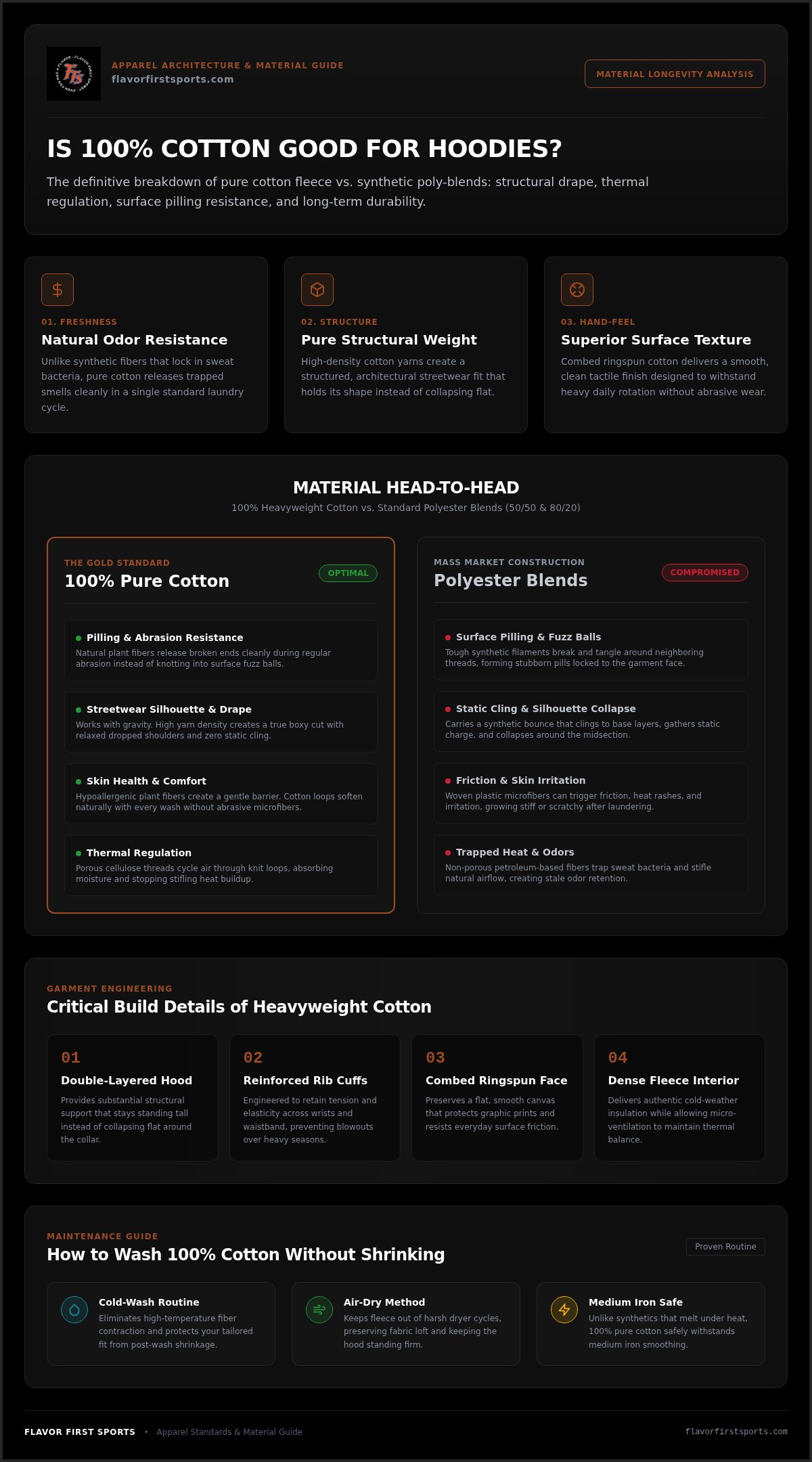
- Natural odor resistance: Unlike synthetic fibers that lock in sweat bacteria, cotton releases trapped smells cleanly in a single cycle.
- Pure structural weight: High-density cotton yarns create a structured streetwear fit that holds its shape instead of collapsing flat.
- Superior surface texture: Ringspun cotton yields a clean, tactile finish built for heavy daily rotations.
Natural Breathability and Thermal Balance
Cotton fibers breathe because they are porous by design. Natural cellulose threads absorb moisture from your skin and let air cycle through the knit loops, stopping the stifling heat typical of synthetic fleeces. That continuous air passage creates authentic thermal regulation. You get reliable warmth during freezing morning sessions alongside effortless comfort when the sun breaks through midday.
Hypoallergenic Comfort for Sensitive Skin
Synthetic fleece is essentially woven plastic, which easily triggers friction, heat rashes, and skin irritation. Pure plant fibers completely eliminate those abrasive microfibers, giving you a smooth barrier that sits gently against sensitive skin. Instead of becoming scratchy or stiff after laundering, the loops on an all-cotton interior soften naturally with every wash, developing a broken-in texture that gets better the longer you own it.
100% Cotton vs. Polyester Blends: Performance and Longevity
Putting pure cotton head-to-head with poly blends exposes two completely different garment philosophies. Mass manufacturers push 50/50 and 80/20 cotton-polyester blends because synthetic yarn cuts production costs, resists wrinkles, and speeds up drying times. Yet anyone asking whether is 100% cotton good for hoodies for high-rotation wear will quickly see the trade-offs. Synthetic fibers compromise the tactile density, breathability, and authentic drape that define top-tier apparel. Pure cotton handles real friction without melting under medium iron heat, giving you a garment built for years of rotation rather than a single season.
Resistance to Pilling and Fiber Wear
Nothing cheapens an outfit faster than clusters of fuzz across the chest, cuffs, and forearms. Polyester fibers are exceptionally tough synthetic filaments. When friction breaks their microscopic strands, they tangle around neighboring threads and form stubborn pills that lock onto the garment face. Cotton behaves differently. As detailed in the Cooperative Extension textile and fiber guide, natural plant fibers release broken ends cleanly during regular abrasion instead of knotting into unsightly surface balls. Combed ringspun cotton preserves a smooth, flat face, protecting your graphic prints and keeping the fabric pristine through dozens of laundry cycles.
Silhouette, Weight, and Streetwear Drape
Stand in front of a mirror and the physical difference is obvious. Polyester fleece carries a synthetic bounce that clings to your base layers, gathers static charge, and collapses around your midsection. Pure cotton fleece works with gravity. Its yarn density yields an authentic boxy cut with clean lines, relaxed dropped shoulders, and zero static cling. When you build an everyday outfit, you want fleece that holds its own architecture and commands attention. For athletes and creators looking for that structural edge, exploring the heavyweight fleece lineups at Flavor First Sports shows how pure cotton builds the definitive streetwear silhouette.
Understanding Cotton Hoodie Weight: GSM, French Terry, and Fleece
Fabric weight controls everything. It dictates warmth, structural presence, and how cleanly the garment falls across your frame. Knitted density is measured in GSM, or grams per square meter. When deciding whether is 100% cotton good for hoodies in cold weather, fabric weight provides the definitive answer. Flimsy knits collapse, but high-density cotton creates an unmistakable visual impact.
- Lightweight (Under 300 GSM): Built for warm spring afternoons and temperate summer evenings. Easy to pack and layer, but lacks standalone wind resistance.
- Midweight (300 to 380 GSM): The benchmark for everyday comfort. Offers dependable indoor insulation and layers effortlessly under coats without adding bulk.
- Heavyweight (400+ GSM): True streetwear territory. Heavyweight cotton stops cutting breezes, delivers a sculptural drape, and holds its form over years of daily grind.
Decoding Fabric Density: From Midweight to Ultra-Heavyweight
GSM measures the metric mass of the knitted cloth. Lower density fabrics stretch out at the elbows and hem, losing their integrity after a few weeks. High GSM cotton fleece locks its shape in place. The dense weave creates structural stability that synthetic fibers cannot duplicate. Clean, substantial pieces like the LA Legacy Heavyweight Hoodie prove how 400+ GSM cotton creates an elite, tailored silhouette while standing up to endless wear. As noted in the University of Georgia Extension textile fiber guide, fiber density directly influences the warmth retention and structural durability of natural plant textiles.
Interior Textures: French Terry Loops vs. Brushed Fleece
Yarn texture inside the garment changes your performance profile completely. French Terry features unbrushed knit loops along the interior. These loops pull moisture away from your body, leaving a crisp exterior finish and a cool, dry interior for transitional weather. Brushed cotton fleece takes those loops and brushes them into an ultra-soft, raised pile. That lofted fiber bed traps pockets of warm air against your torso, locking in heavy insulation when temperatures dip. Both methods highlight why is 100% cotton good for hoodies that bridge seasonal demands without relying on synthetic blends.
How to Wash 100% Cotton Hoodies Without Shrinking
Shrinkage is the single biggest fear keeping people on the fence. When buyers ask whether is 100% cotton good for hoodies, their hesitation almost always traces back to a favorite layer ruined in the wash. That frustration makes sense, but cotton shrinkage is entirely preventable with disciplined care. Natural cellulose fibers do not tighten up on their own; they constrict when violent mechanical agitation collides with extreme heat. Wash cold, air dry flat. Stick to that golden rule and your hoodie will maintain its original measurements for years.
Taking care of heavyweight fleece takes minimal effort once you build the routine:
- Turn garments inside out: Shields graphic artwork, chest embroidery, and the outer fleece face from friction against the washing drum.
- Run cold cycles only: Keeps water temperatures at or below 30°C (86°F) to stop relaxed knit fibers from snapping tight.
- Select gentle liquid detergent: Avoids aggressive powders or bleach additives that degrade cotton fibers and fade deep dye saturation.
Washing Protocols: Temperature, Cycles, and Detergents
Heat is the enemy of raw cotton. Hot water forces spun yarn to contract back toward its unworked state, costing you inches across the chest and hem. Always set your washer to a cold, gentle cycle. Liquid detergents disperse cleanly in cold water, lifting dirt and sweat without leaving chalky residue on dark fleece. Flipping the garment inside out before it hits the drum preserves the rich exterior dye and keeps printed graphics looking crisp drop after drop.
Drying Techniques to Lock In Original Fit
Tumble dryers are where great streetwear goes to die. High heat rapidly bakes residual moisture out of cotton yarn, tightening the loops and permanently warping your silhouette. Instead, pull the hoodie straight from the rinse cycle, gently pull the torso and sleeves to reshape them, and press the double-layered hood into place. Lay the garment flat across a drying rack. Never toss heavy, damp fleece over a wire hanger, which stretches the neckline and creates awkward shoulder bumps.
Ready to build a reliable rotation with zero guesswork? Treat your pieces with the care they deserve and shop the premium fleece collection at Flavor First Sports engineered for heavyweight durability from day one.
What to Look for in a Premium Heavyweight Cotton Hoodie
Spotting elite craftsmanship requires looking past the brand tag and examining the structural skeleton of the garment. You already know that is 100% cotton good for hoodies when you demand heavyweight breathability and zero pilling. Real quality reveals itself in functional tailoring that stands up to daily movement. Cheap garments use single-layer cuts and flimsy stitching that blow out after minor stress. Premium cotton fleece relies on intentional reinforcement to preserve its boxy streetwear frame.
Inspect these key structural markers before adding any piece to your lineup:
- Double-layered hood construction: Uses two plies of heavyweight self-fabric so the hood stands upright rather than flopping flat across your upper back.
- High-density elastane ribbing: Heavy rib knits at the cuffs and hem snap back instantly to eliminate loose, rippling edges.
- Twin-needle seam reinforcement: Dual rows of parallel stitching lock down high-tension stress points around the kangaroo pocket, armholes, and shoulders.
Structural Hood Design and Reinforced Stitching
The hood is the centerpiece of the garment's profile. Flimsy, single-ply hoods collapse into an unsightly clump around your neck. Precision engineering uses two-piece or three-piece panels constructed from double-layer cotton to build an ergonomic contour that wraps your head cleanly and repels sudden wind gusts. The Courtside Coffee Hoodie delivers a masterclass in tailored hood geometry, giving athletes and creators an upright, structured build that excels during crisp morning shootarounds.
The Long-Term Value of Investing in Quality Cotton
Pure cotton garments age with character. Instead of degrading into brittle, shiny patches like synthetic fleeces, dense cotton yarn breaks in naturally, softening around your movement patterns while holding its shape. Investing in elite construction eliminates the endless cycle of replacing distorted fast-fashion tops. For an uncompromising standard in modern streetwear, the BOROUGH BIRD™ Premium Oversized Hoodie delivers the ultimate blueprint: heavy yardage, reinforced hems, and enduring everyday drape.
Upgrade Your Rotation With Pure Heavyweight Cotton
Settling the fleece debate comes down to how your gear performs over time. When asking whether is 100% cotton good for hoodies, the real proof shows up on the street. Pure cotton eliminates synthetic surface pilling, breathes naturally from morning grinds to late nights, and commands a boxy drape that blends can't match. Pair those benefits with simple cold-water washing, and you have an enduring layer that never loses its shape.
Top-tier sportswear demands craftsmanship you can feel. Seek out ultra-heavyweight cotton fleece built for structured streetwear silhouettes, double-layered architectural hoods that stand tall and never collapse flat, and reinforced ribbing and heavy seams designed to endure daily fan grinds. You don't have to settle for flimsy fabric anymore. Elevate your rotation with premium heavyweight cotton hoodies built for real comfort and unmatched durability.
Frequently Asked Questions
Does a 100% cotton hoodie shrink after washing?
Yes, untreated pure cotton will contract if exposed to heat and violent cycle agitation. High temperatures snap relaxed fibers back together, costing you length across the chest and torso. You prevent this entirely by washing in cold water at or below 30°C (86°F) and laying the damp garment flat to air dry. Pre-shrunk cotton reduces initial shrinkage down to minimal levels, preserving your tailored silhouette wash after wash.
Is a 100% cotton hoodie warm enough for cold winter weather?
Pure cotton delivers solid warmth when you choose the right weight. Lightweight fleece won't cut it in freezing conditions, but heavyweight fleece clocking in at 400 GSM or higher blocks biting wind and traps ambient body heat effectively. For deep winter, pairing a dense, brushed cotton hoodie with a double-layered hood under a sturdy jacket creates a breathable, layered barrier that keeps you insulated without sweating out your base layers.
Why are pure cotton hoodies more expensive than polyester fleece blends?
Raw natural cotton costs substantially more to farm, spin, and knit than synthetic polyester derived from petroleum. Crafting heavyweight combed ringspun cotton requires premium long-staple fibers, rigorous sorting, and precise knitting machinery to achieve a dense, pill-resistant surface. Poly blends use cheap synthetic filaments to cut costs and speed up production. When considering whether is 100% cotton good for hoodies, the higher price tag reflects tangible fiber density, breathability, and structural durability.
What is the ideal fabric weight for a high-quality cotton hoodie?
Look for fabric weighing between 400 and 500 GSM for true streetwear structure. Lower weights under 300 GSM feel thin and drape limply, functioning best as lightweight summer layers. Midweight options around 350 GSM work well for mild indoor wear. However, hitting the 400+ GSM mark gives pure cotton the muscular density, architectural drape, and weather-resistant thickness needed to hold a bold silhouette across endless rotations.
Is 100% cotton or an 80/20 cotton-poly blend better for everyday hoodies?
Pure cotton wins on tactile comfort, breathability, and long-term surface quality. Synthetic 80/20 blends offer minor wrinkle resistance and dry faster, but the polyester filaments eventually break and tangle into unsightly surface pills. Pure 100% cotton releases odors cleanly, stays hypoallergenic against bare skin, and develops a rich, broken-in character with age. If you want a structured drop that looks better the longer you wear it, pure cotton is the undisputed champion.
Can you put a 100% cotton hoodie in the dryer without damaging it?
Tumble dryers are the fastest way to ruin natural fleece. High drum heat rapidly cooks residual moisture out of cotton fibers, forcing the knit loops to pull tight and shrink the garment. Beyond shrinkage, prolonged mechanical tumbling causes friction that frays surface fibers. If you must use a machine dryer, select an ultra-low heat or air-only fluff cycle. For maximum garment life, air drying flat remains the only foolproof method.
How do you keep a 100% cotton hoodie soft over years of wear?
Skip chemical fabric softeners that coat natural fibers with waxy silicone residue. Instead, wash your hoodie inside out with a gentle liquid detergent and add half a cup of distilled white vinegar to the rinse cycle to naturally dissolve mineral buildup. Air dry flat out of direct harsh sunlight. Determining is 100% cotton good for hoodies over time comes down to this simple routine, letting the knit loops soften naturally with age.